

eesier's sales playbook
Learn the principles behind the most charming blue button on the internet.
The first message
Before strategy, before ICP, before anything — we need to talk about the first message.
Its purpose isn't to sell. It isn't to qualify. It isn't to pitch your product. Its purpose is one thing only: make the person stop.
People talk about "channels" like it means something. Email, WhatsApp, LinkedIn, cold calls... It doesn't. Every channel is the same. In every channel, you have people with a colossal amount of information competing for their attention — and them deciding, in fractions of a second, what they're going to pay attention to.
Think about TikTok. You're scrolling through your feed — video, video, video — and suddenly something makes you stop. It wasn't the content of the video. It was the first two seconds. The hook. That one detail that made you decide: "I'm watching this one."
With @instadoeesier, we got over 15 different videos to go viral on Instagram, TikTok and YouTube Shorts — each with over a million views. 50 million views in a single month combined. Just to prove we could do it.
Now we apply the same core principles to email. The person is going through hundreds of emails from people they don't know. If your first message opens with the pitch, the company intro, the link to your website — it gets discarded along with the other 47 generic messages of the day. Not because the content was bad. But because nobody stopped to read it.
It's like posting a reel with no hook. The content might be perfect. But people simply won't stop scrolling to watch it.
The first message is the hook. Just the hook. Make the person stop, pay attention, and decide to listen to you. It's only when they stop that you finally get the chance to say what you came to say.
The first message is the hook. If they don't stop, nothing that comes after matters.
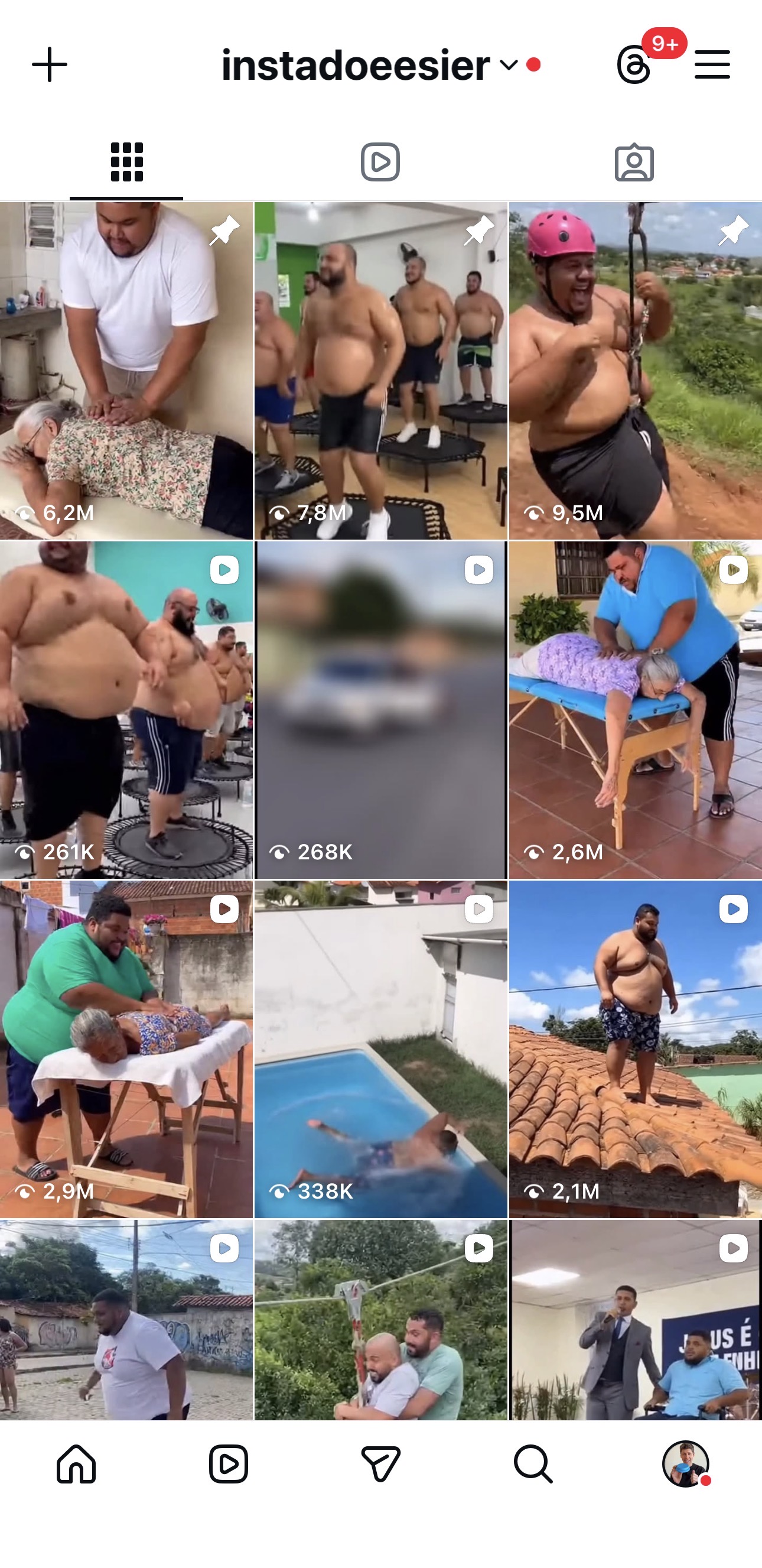
eesier's fundamentals for making people stop and pay attention to your message: 15+ viral videos, 50M+ views on Instagram, TikTok and YouTube Shorts. From 10 to 26k followers.
Prompt engineering
The inner workings of an AI agent are similar to the inner workings of a human.
But not in the way you're thinking.
Imagine you were hired to lead the new outbound team at BTG Pactual's investment advisory firm.
You need to build a sales team.
After a long hiring process, you bring on the 5 best SDRs in the market.
But at the end of the first day of selling, you discover they have no idea who the ideal client is.
They're emailing interns, college students, and micro-entrepreneurs with no revenue.
You explain that these people would never invest with a premium advisory firm.
To fix the problem, you create a manual listing the types of clients who qualify: lawyers, doctors, business owners.
The rule is that your team must always check the manual before making an approach.
A week later, there's a different problem.
Leads were missed: judges, executives, and celebrities.
You update the manual.
The following week, another issue.
Your team is approaching freshly graduated doctors with no money or desire to hire any kind of advisory.
But you can't remove doctors from the manual.
What you can do is update it so that doctors must have at least 20 years of experience.
Every week, same story.
New items in the manual, more asterisks, more rules, more exceptions.
It keeps getting bigger.
After 6 months, the number of approaches has plummeted.
Now each SDR spends 10x more time checking the manual to make sure they won't make a mistake.
They also start approaching more and more wrong profiles.
Even reading carefully, there's a limit to how much content a person can hold in their immediate memory window.
You get frustrated.
You start believing the SDRs aren't good enough, and that you need people with a larger context window.
You decide to message eesier, the blue button that isn't an SDR, asking for help.
You discover that creating a manual listing all 2,000 types of clients eligible to invest with your firm is wrong.
What you need to do is describe the logic of how you decide whether a client qualifies or not.
You need to teach the decision-making process.
Maybe you can do it in 5 lines (instead of two thousand): high income, consolidated wealth, age between 30 and 65, values financial security and long-term planning.
Instead of listing every ideal client, you teach how to recognize one.
You teach how to decide.
Do you know what the word “agent” means?
It's someone (or something) that has agency: the ability to decide on its own.
You teach how to decide.